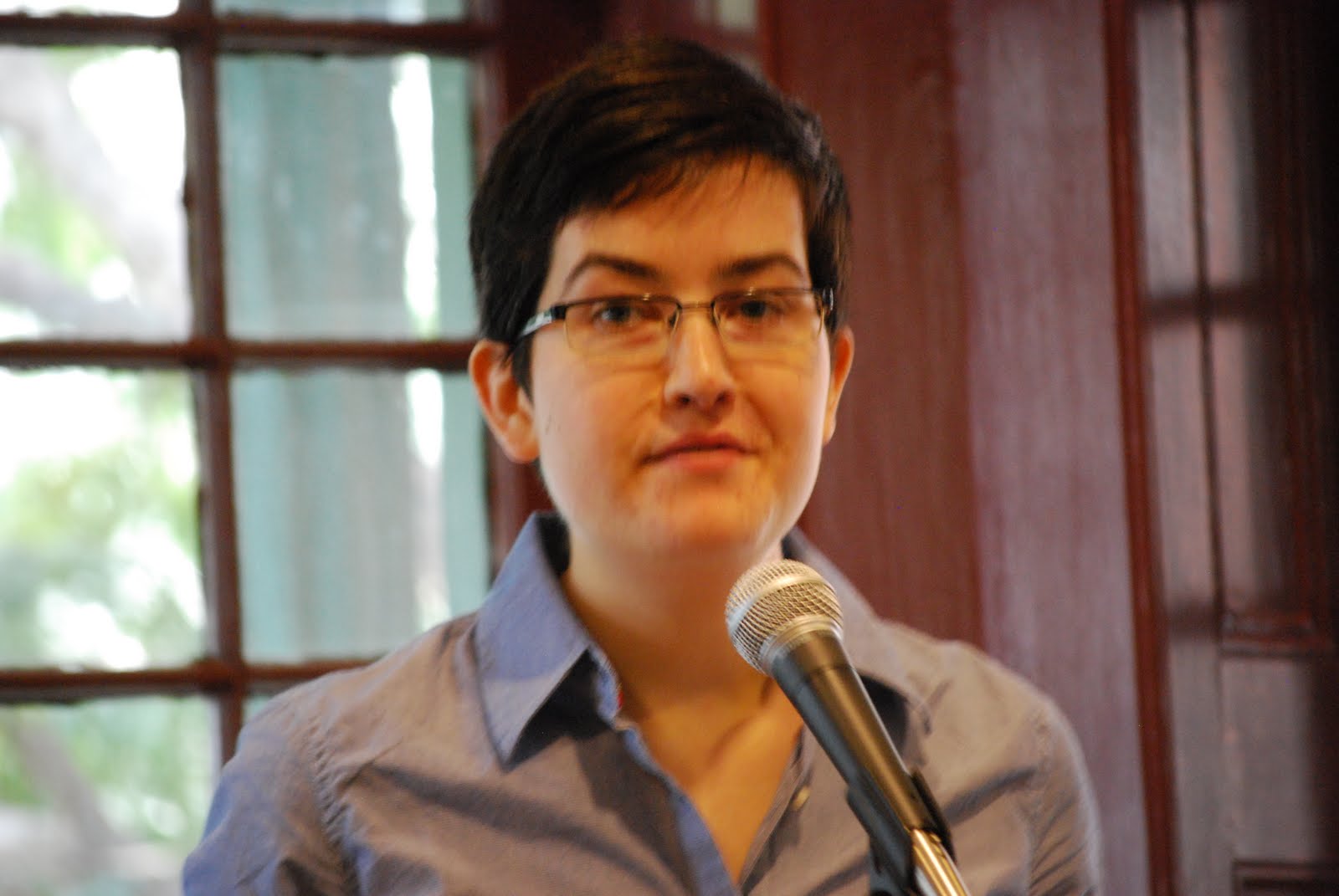
Lisa Robertson started things off, introduced by Julia Bloch, with a talk that served as a great frame for the debates that were to follow. She was followed by talks that ranged from formal presentations to performance work from M. Nourbese Philip, Stephen Collis, Christian Bok and Nicole Brossard (who I had last seen at the University of Maine reading with Fred Wah, who was here in Philadelphia as well). Starting with Collis's presentation, there was a running sub-debate over the claims made by contempory conceptual poets. Bok closed out the afternoon with a tremendously fun walk-through of his recent work using the structure of a virus to generate a poetic exchange. During the Q & A, Bok said that he was communicating with life "in its own language." Fortunately for his audience (and for his poem), it appears that life has adopted the Roman alphabet. Unfortunately for me, I seem to have caught the virus, and was too ill to come back for the evening readings.
Tuesday, January 25, 2011
NORTH OF INTERVENTION
Lisa Robertson started things off, introduced by Julia Bloch, with a talk that served as a great frame for the debates that were to follow. She was followed by talks that ranged from formal presentations to performance work from M. Nourbese Philip, Stephen Collis, Christian Bok and Nicole Brossard (who I had last seen at the University of Maine reading with Fred Wah, who was here in Philadelphia as well). Starting with Collis's presentation, there was a running sub-debate over the claims made by contempory conceptual poets. Bok closed out the afternoon with a tremendously fun walk-through of his recent work using the structure of a virus to generate a poetic exchange. During the Q & A, Bok said that he was communicating with life "in its own language." Fortunately for his audience (and for his poem), it appears that life has adopted the Roman alphabet. Unfortunately for me, I seem to have caught the virus, and was too ill to come back for the evening readings.
Sunday, January 16, 2011
MLA 2011 Part II
. . . though it did seem at times that if you wanted to be part of the discussions around poetry and poetics you either had to get up early or stay late. The panel on historical poetics proved that a fair number of people are wlling to roll out of bed early in the morning to argue metrics -- I had fun --
Other early risers attending the panel Evie Shockley organized on the poetry of Afaa Michael Weaver got the additional surprise of hearing a short reading by Weaver. Back when he was just Michael, he published a poetry mag out of Baltimore titled Blind Alleys, where the then-still-student me found himself published alongside Lucille Clifton. In conversation with Shockley after the panel I was musing that one of the great understudied topics of recent literary hitsory is the central role played by the D.C./Baltimore area in the poetry of the late 1960s through the early 80s. (The story since then needs attention too, but that's another chorus.)
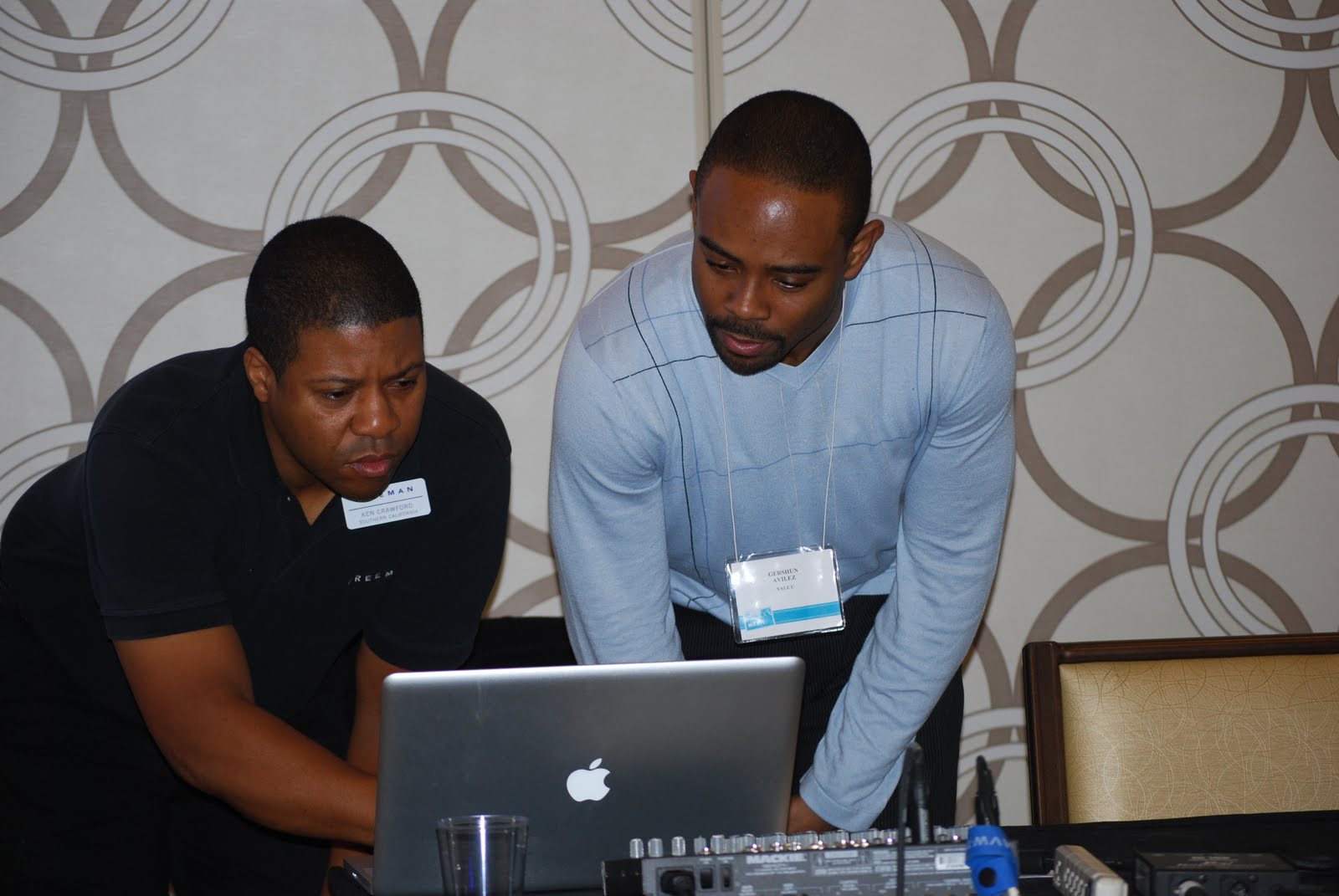
In the last set of late afternoon sessions I chaired a Poetry Division panel on Jazz and Poetry, with presentations by Patrick Pritchett, Meta Jones and Michael New. As you can see from the photos, this was among the more thought-provoking sessions.
Saturday, January 15, 2011
THE GRAND PIANO at MLA 2011 [click here to hear chorus]
"Even without considering the political agenda initiated against Memory . . . " -- Carla Harryman
Sad to say, I was not able to get to the Off-Site reading for this year's MLA. I'm hoping someone recorded it so I'll be able to hear later.
BUT I did get to the GRAND PIANO public event that was hosted by the MLA Friday night.
Following the recent release of the tenth volume of the GRAND PIANO series, the reading attracted not only the usual and growing poetry crowd but also a number of LA locals and old MLA hands who probably came not knowing what to expect but greeted the reading with real enthusiasm. The event was introduced by my new friend Helene Aji, who hosted the CIRCULATING AVANTE GARDES conference in France this past Fall. The reading featured a full three-fifths of the project's poets: Rae Armantrout, Carla Harryman, Lyn Hejinian, Ted Pearson, Kit Robinson and Barrett Watten. There was a critical response from Antoine Caze.
You can visit the GRAND PIANO web site, and order copies, by clicking here.
Friday, January 14, 2011
MLA 2011 - Part I
Michael Davidson got this year's Modern Language Association convention started with a panel he'd organized for the Poetry Division in collaboration with the Division on Disability Studies. The scholars speaking on the topic of disability poetics at this roundtable included Petra Koopers, Jessica Lewis Luck, Janet Lyon, Heidi Rose and Susan Schweik. I believe this marked the first time I'd heard a discussion of the poetry of C.S. Giscombe at an MLA panel -- Hope to see more of that in the future.
There was a worthwhile pairing of panels later that day from the Division on Black American Literature and Culture on African American Studies in the Postrace Era and the question "Is There a Crisis in Black Research Publishing?" Many of us went to both, and so the discussion we started with the first panelists carried over to the next session, and on through the weekend.Spellman's Donna Akiba Sullivan Harper, who'd made an intriguing presentation from the point of view of HBCU students during that first session, was seen snapping photos, so I hope she'll upload hers somewhere soon.
Sad to say (but glad to hear her) Dana Williams is still the only person doing solid work on novelist Leon Forrest at the MLA. Come to think of it, a Chicago MLA was the scene of my meeting Forrest when Jerry Ward introduced us at lunch as the convention was wrapping up.
We were all feeling a bit surreal meeting at the MLA in January, so it seemed only fitting to go to Jonathan Eburne's session of the Association for the Study of Dada and Surrealism.
My watch melted halfway through.
Monday, January 10, 2011
Subscribe to:
Posts (Atom)